People often think that being a creative is fun all the time. And the truth is, it is, but just not all the time. Like every other job, it has its ups and downs.
People see the beauty. The finished work. The praises, the good and bad reviews, the wins. What they don't often see is the uncertainty. The discipline. The loss. The emotional labour that goes into creating something from nothing. From getting the first spark of an idea to figuring out how to even start.

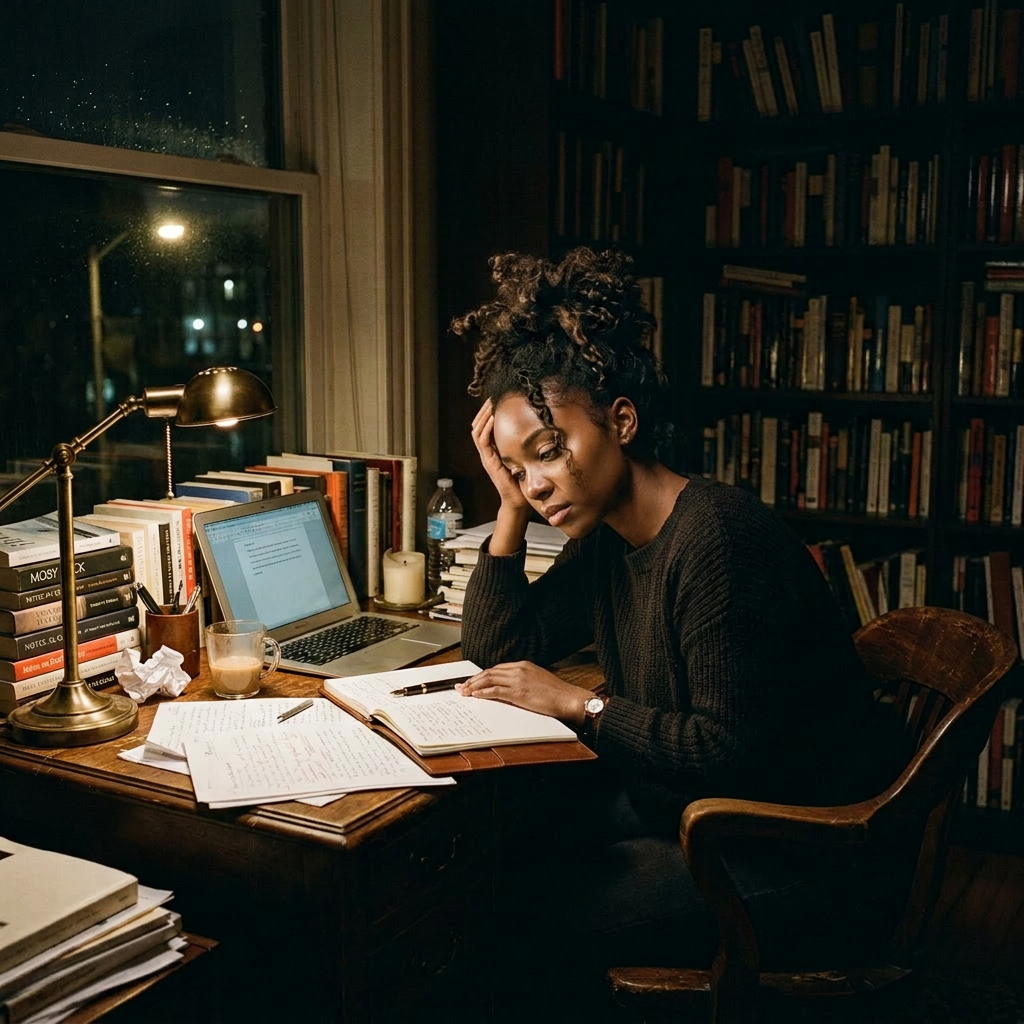
As a writer, the struggle kicks in the moment I have to build the background for a whole story. The questions come flooding: How do I tell this story? How do I get to the main point? How long should it be? What will the title be? How do I create my characters? What would be their flaws, their personalities, their ambitions? What should they look like? What should they sound like? How many characters need a backstory? Some characters need a lot of backstory. Others need just a little. And sometimes, more than one character might need a backstory. Figuring out which is which takes time.
Then comes the outline, which is always the hardest part for me. I do not like to outline. I like to go with the flow. And that is stressful, because I always have a peak in mind and I need to know how to get there. In this case, a peak for me might be the end of the story. It could be the major information or the plot twist. And that's just the very beginning.
Writing a story is like building a house.
Now, another part nobody sees is the work behind the scenes. Once the writing is done, you still have to market it. You might not need to do this if you are not an indie author, to be honest. But as an independent author, some of us have no team to hand things off to. So, cover design, book layout and formatting, proofreading and editing are all on you. You have to write a blurb that actually makes people want to pick it up. And people might think how hard can that be for a writer, but it can be hard. If you can't afford to pay for these services, you just have to do them yourself. And it takes a toll on you.
It did take a toll on me. The whole of March, I was inconsistent. And it was not intentional. I should be pushing and posting my new book to drive pre-order sales, but work had me in a chokehold. It didn't even help that electricity was mostly out. I was just too exhausted to create or design anything for promotion. That's how life gets in the way of the creative process sometimes. The reality of most creatives.
Then, there’s the pressure to keep producing, and it comes from people who genuinely love your work. This pressure is not intentional. It exists because they want more of it, and that want comes from a good place. But it also brings a different kind of pressure. The messages start coming: 'When's your next book?', 'What are you working on?' 'Can't wait to read your next book', 'You haven't posted in a while'.
While I believe creatives appreciate the support, I also think people need to understand that creativity needs space and time. If it takes time for a creative to release a new project, it doesn't mean that they've fallen off. Or that they don't care about their fans. It just takes time, sometimes, for many valid reasons. Personally, I spend a long time on a project. After I finish, it takes a while to detach from that world and those characters. So I struggle to start something new because it feels like the old one isn't over.
There’s also the free work problem, and that’s another thing many creatives struggle with: the expectation of free work. As an author, people expect free books from me, and I don't mean advance readers or beta readers.
Several times, people just ask me to give them my book. Just to give them. It could be a hardcopy or a softcopy. Their reason is that people read books online for free now. Yes, people do. But there are already structures in place for the author of that book to make money. While in other cases, some authors gives out one or two of their books for free so they can get reviews. One way or the other, they get something in return. You don’t just ask a visual artist to give you their painting because people sell artworks in traffic. You don't ask a filmmaker to send you their movies through Xender. Or ask that they airdrop it to you. Filmmakers want people to watch their movies through the right channels. This way, they can make their money back and also earn a profit. Every creative wants to earn a profit, either monetary or in other ways.
That’s some people's means of livelihood; if they give it to you for free, how do they survive?
And this ties to the larger conversation around piracy. One of the reasons I took my books off Wattpad was plagiarism. My work means a whole lot to me. The thought of waking up one day to find someone has stolen it is genuinely painful. They could put their name on it and share it for free. And watching people defend that kind of thing is something I still can't wrap my head around.
For the longest time, I saw Damilare Kuku’s NATMILAM in traffic, in the streets for 2,500 or 3,000. That’s piracy in broad daylight. This book costs more than that in book stores.
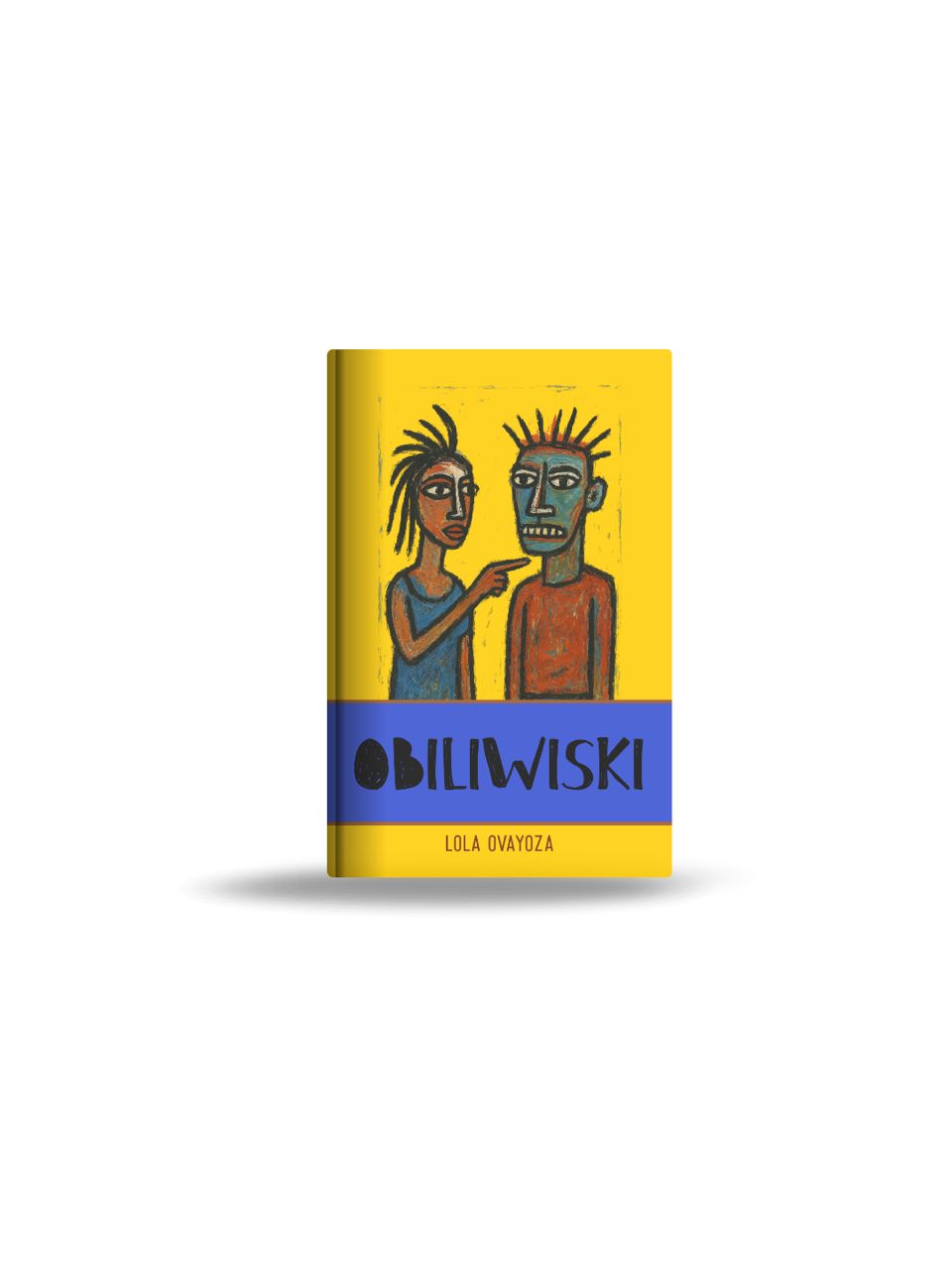
Some people will say, ‘books are expensive and not everyone can afford it.’ That is very true. But ‘expensive’ is relative and subjective. At the same time, there are other options. There are thrift options, there are Advanced Reader options, and there are affordable eBook options (e.g Masobe). I started with thrift till I could afford not buying thrift. My first book costs 3,500. Yes, it’s a short book. I made the price as low as that. This way, the majority can afford it. And the eBook is lower than the paperback for the same reason.
Everyone enjoys art, at the end of the day, but very few people understand the labour behind it. And the number of people who undervalue creative work is much larger than most would admit.
On criticism and comparison, there's this attitude of 'what is it that you've done that someone else can't do better?' And while that is true, there are better writers, designers, singers, and illustrators out there. But they can't replicate each other's unique styles. There's always a nuance. That nuance is what makes each creative who they are.
Every creative work comes from somewhere personal. Which is why the feedback hits differently.
You are not in the best position to judge the work if you are not specialised in a particular area. I genuinely think this. People who have never written a flash fiction will critique a trilogy and call it trash. There's a difference between having an opinion based on how you understood something and making a sweeping judgment about its worth.
I can listen to a song and say I don't like it. That doesn't make the song bad. It just means it wasn't for me. Someone else might love it. But deciding it's trash and making sure everyone knows? That's a different thing entirely.
Personally, I welcome honest reviews. They help me grow. The feedback might not be what I expected, but I always try to take what's useful and leave the rest. If you've read any of my books and think they could have been better, please tell me. Creatives need that.
On why we keep going despite all of this is because creatives can’t stop creating. Not because it's easy, but because something inside refuses to stay silent.
Creativity is difficult. But for many of us, not creating is even harder.
2 Responses
Thank you for carefully detailing what indie writers go through every time a publication is out. I’m not a writer myself but I can relate with this concerning creating output in other aspects of creativity. Absolutely love the closing line. Thank you again.
Thank you for your kind comment, Romade The First. I really appreciate it.